AMERICA AT 250
The Story of a Nation: Revolution, Constitution, Presidents, Wars, Economy, Immigration, Innovation, Diversity, Crisis, and Hope.
Created by YebboBooks and YebboHistory for America's 250th Birthday.
To the People Who Built, Challenged, Defended, and Renewed America
This book is dedicated to the generations who built, defended, challenged, repaired, expanded, criticized, loved, and improved the United States of America.
It is dedicated to the Native peoples who lived on this land long before 1776; to enslaved Africans whose labor helped build the early economy while they were denied freedom; to immigrants who crossed oceans and borders seeking a better future; to soldiers who fought in wars; to workers who built railroads, factories, bridges, farms, cities, schools, churches, hospitals, and homes; to women and men who demanded equality; to inventors, teachers, parents, farmers, small business owners, public servants, artists, and dreamers.
Why America's 250th Birthday Matters
On July 4, 2026, the United States marks 250 years since the Declaration of Independence. Two hundred fifty years is a long life for a republic. Many empires rose and fell in less time. Many nations changed borders, governments, names, and identities. America survived revolution, civil war, economic crashes, assassinations, pandemics, terror attacks, political conflict, racial injustice, foreign wars, and deep internal divisions.
But America also produced extraordinary achievements: a written Constitution, peaceful transfers of power, the Bill of Rights, mass immigration, public education, industrial growth, world-changing inventions, civil rights victories, scientific breakthroughs, the moon landing, the internet age, medical innovation, cultural influence, and one of the world's largest and most dynamic economies.
America's 250th birthday is not only a celebration. It is a national mirror. A birthday asks where we came from. History asks what we did right and what we did wrong. Citizenship asks what we must do next.


Before America Was America
Before the United States existed, the land was home to many Indigenous nations. The continent was not empty. It had languages, trade routes, farms, cities, spiritual traditions, diplomacy, war, art, law, and memory.
European colonization changed everything. Spain, France, the Netherlands, and Britain built colonies. Disease devastated Native populations. Land was taken. Wars were fought. Enslaved Africans were brought across the Atlantic and forced into labor. The economy of the colonies grew, but so did contradiction: liberty for some, bondage for others.
By the 1700s, Britain's thirteen colonies on the Atlantic coast had become prosperous and restless. Colonists traded, farmed, published newspapers, built churches and schools, and developed local assemblies. They thought of themselves as British subjects, but they increasingly resisted decisions made by a distant Parliament.
After the French and Indian War ended in 1763, Britain tried to tax the colonies to pay war debts. The Stamp Act, Townshend Acts, Tea Act, and other measures angered colonists who argued: no taxation without representation.
The conflict became more than taxes. It became a question of power. Could people govern themselves? Could a colony become a nation? Could liberty be declared before it was fully practiced? The answer came in revolution.
1776: The Declaration and the Birth of a Nation
In 1776, the Second Continental Congress adopted the Declaration of Independence. The document announced that the thirteen colonies were no longer colonies but free and independent states.
The Declaration did three powerful things. First, it explained a political philosophy: rights come before government. Government exists to secure rights, not to grant them as favors. Second, it listed grievances against King George III, arguing that Britain had violated the rights of the colonies. Third, it made a bold claim: the people had the right to alter or abolish a government that became destructive of liberty.
But the Declaration also carried contradiction. It spoke of equality while slavery continued. It spoke of consent while women, Native Americans, enslaved people, and many poor men had little or no political voice. That contradiction would shape the next 250 years.
Revolution and Survival: 1776-1783
Declaring independence was easier than winning it. The American Revolution was a war against one of the most powerful empires in the world. George Washington led the Continental Army through defeat, hunger, disease, and uncertainty. The winter at Valley Forge became a symbol of endurance. Ordinary soldiers, farmers, merchants, Black patriots, Native allies, women, and foreign volunteers all shaped the struggle.
France became America's most important ally. French money, soldiers, ships, and diplomacy helped turn the war. Spain and the Netherlands also pressured Britain. The turning point came at Yorktown in 1781, when American and French forces trapped British General Cornwallis. The Treaty of Paris in 1783 recognized American independence.
America survived its first test. But independence created a new question: Could thirteen jealous states become one functioning nation?
From Articles to Constitution
The first national government operated under the Articles of Confederation. It was weak by design. Many Americans feared strong central power because they had just fought a monarchy. But weakness brought problems. Congress could not easily tax. It could not regulate trade effectively. It struggled to pay debts. States quarreled.
Shays' Rebellion in Massachusetts frightened leaders. It showed that the young republic could collapse under debt, unrest, and weak authority. In 1787, delegates met in Philadelphia. Their purpose was to revise the Articles. Instead, they wrote a new Constitution.
The Constitution created three branches of government: Congress to make laws, the President to execute laws, and the Supreme Court and federal courts to interpret laws. It created federalism, dividing power between national and state governments. It created checks and balances. It created a stronger union.
But it also included compromises with slavery, including the Three-Fifths Compromise and protections for the slave trade until 1808. The Constitution was both a framework for liberty and a document marked by the injustice of its time.
Ratification was difficult. Federalists supported the Constitution. Anti-Federalists feared centralized power. The promise of a Bill of Rights helped secure support. In 1789, the Constitution went into effect. George Washington became the first president.
The First Presidents and the Young Republic
George Washington set the tone. He could have sought power for life, but he stepped down after two terms. That decision became one of the most important examples in republican history.
John Adams faced conflict with France and political division at home. Thomas Jefferson purchased Louisiana from France in 1803, doubling the size of the country. James Madison led the country during the War of 1812. James Monroe presided over the Era of Good Feelings and announced the Monroe Doctrine, warning European powers against new colonization in the Americas.
The early republic expanded westward. Expansion brought land, resources, and opportunity for many settlers. It also brought removal, broken treaties, violence, and dispossession for Native nations. America grew, but its growth carried moral cost.
Expansion, Cotton, Slavery, and Conflict
The 1800s were years of expansion. The Louisiana Purchase, the Lewis and Clark expedition, settlement across the continent, the annexation of Texas, the Oregon boundary settlement, and the Mexican-American War transformed the map.
The idea of Manifest Destiny claimed that the United States was destined to expand across North America. To many Americans, it sounded like progress. To Native peoples and Mexico, it often meant conquest.
Cotton became king in the South. Enslaved labor powered plantations and enriched not only Southern planters but also Northern merchants, banks, insurers, and textile mills. Slavery became the central contradiction of the republic.
The Missouri Compromise, Compromise of 1850, Kansas-Nebraska Act, Dred Scott decision, and violence in Kansas showed that compromise was failing. The country was splitting.
Civil War, Emancipation, and Reconstruction
In 1860, Abraham Lincoln was elected president. Southern states seceded. In 1861, Confederate forces fired on Fort Sumter. The Civil War began.
The war was about union, slavery, power, and the future of democracy. Could a republic survive if states could leave after losing an election? Could a nation founded on liberty continue to protect slavery?
In 1863, Lincoln issued the Emancipation Proclamation, transforming the war into a fight against slavery. Black soldiers served in the Union Army and helped win their own freedom. The war killed more Americans than any other conflict in U.S. history. It destroyed cities, families, and economies. In 1865, the Union won. Lincoln was assassinated days later.
Reconstruction was America's second founding. The 13th, 14th, and 15th Amendments transformed the Constitution. Formerly enslaved people built churches, schools, businesses, and political organizations. Black men voted and held public office. But Reconstruction faced violent resistance. Federal commitment weakened. In 1877, Reconstruction effectively ended. Jim Crow laws followed.


Railroads, Industry, Immigration, and Reform
After the Civil War, America industrialized rapidly. Railroads connected markets. Steel, oil, banking, electricity, and manufacturing created enormous wealth. Cities grew. Immigrants arrived from Europe, Asia, Latin America, and elsewhere.
The Gilded Age produced titans such as Cornelius Vanderbilt, Andrew Carnegie, John D. Rockefeller, J.P. Morgan, and later Henry Ford. They built industries that changed transportation, energy, finance, steel, and manufacturing.
But the age also brought inequality, dangerous working conditions, child labor, corruption, and violent labor conflict. Workers organized unions. Farmers built movements against railroads and banks. Reformers demanded antitrust laws, food safety, labor protections, and political reform.
The Progressive Era tried to fix the problems of industrial America. Reformers fought monopolies, unsafe food, political machines, and urban poverty. Women organized for voting rights. Journalists exposed corruption. Labor activists demanded better conditions. America became richer and more powerful, but it also became more unequal.
World Wars, Pandemic, Depression, and New Deal
World War I began in Europe in 1914. The United States entered in 1917. American troops helped the Allies defeat Germany. President Woodrow Wilson promoted a vision of international cooperation, but the U.S. Senate rejected joining the League of Nations.
Then came the influenza pandemic of 1918-1919. It killed millions worldwide and deeply affected American communities. The pandemic showed that public health was national security.
The 1920s brought automobiles, radios, jazz, movies, consumer credit, and cultural change. Women gained the right to vote with the 19th Amendment. Harlem became a center of Black creativity. But the decade also brought Prohibition, organized crime, immigration restriction, racial violence, and financial speculation. The party ended in 1929.
The Great Depression devastated families, farms, banks, factories, and cities. Franklin D. Roosevelt became president in 1933 and launched the New Deal. The federal government created jobs programs, bank reforms, Social Security, labor protections, public works, and financial regulations.
World War II became the defining global conflict of the twentieth century. After Japan attacked Pearl Harbor on December 7, 1941, the United States entered the war. America became the arsenal of democracy. The Allies defeated Nazi Germany, and Japan surrendered after the atomic bombings of Hiroshima and Nagasaki. World War II ended fascist expansion and made the United States a superpower.
Cold War, Civil Rights, and a Crisis of Trust
After World War II, the United States and the Soviet Union became rivals. The Cold War shaped politics, military spending, science, culture, and foreign policy. America built alliances such as NATO and partnerships with Japan, South Korea, Australia, and others. The United Nations was created to prevent another world war.
The U.S. fought the Korean War and later entered the Vietnam War deeply, leading to massive protest and national division. The Cuban Missile Crisis brought the world close to nuclear war. The arms race defined global fear. The Cold War also drove innovation, including the space race and the Apollo 11 moon landing.
The civil rights movement challenged segregation and racial injustice. Leaders such as Martin Luther King Jr., Rosa Parks, John Lewis, Ella Baker, Malcolm X, Fannie Lou Hamer, Thurgood Marshall, and many others changed the nation. The Civil Rights Act of 1964 and Voting Rights Act of 1965 became landmarks.
The 1960s and 1970s brought war, protest, assassinations, inflation, oil shocks, and political scandal. Watergate forced President Richard Nixon to resign in 1974, testing the Constitution and showing that even presidents are not above the law.
Technology, Terror, Recession, Pandemic, and Polarization
Ronald Reagan's presidency reshaped politics in the 1980s. The economy changed. Manufacturing declined in some regions, while technology, finance, services, and global trade expanded. In 1989, the Berlin Wall fell. In 1991, the Soviet Union collapsed. The United States emerged as the world's leading superpower.
The 1990s brought economic growth, the internet revolution, cultural globalization, and political conflict. America seemed unmatched, but new challenges were forming.
On September 11, 2001, terrorists attacked the United States, killing thousands. The attacks transformed national security, foreign policy, immigration enforcement, airport security, surveillance, and American identity. The War on Terror raised hard questions about security, civil liberties, torture, veterans, refugees, Islamophobia, and the limits of American power.
The financial crisis of 2008 triggered the worst economic downturn since the Great Depression. In 2008, Barack Obama was elected the first Black president of the United States. His presidency included economic recovery efforts, the Affordable Care Act, the killing of Osama bin Laden, debates over immigration, climate policy, policing, and partisan conflict.
The COVID-19 pandemic was one of the greatest crises of modern American life. Schools closed. Businesses shut down. Hospitals filled. Families lost loved ones. Workers adapted. Scientists developed vaccines at remarkable speed. Public health became political. Trust became fragile.
The early 2020s brought inflation, supply chain disruption, debates over immigration, abortion, voting rights, climate disasters, artificial intelligence, war in Ukraine, conflict in the Middle East, and renewed great-power competition with China and Russia. America reached its 250th birthday not as a calm nation, but as a country still arguing over democracy, truth, rights, borders, identity, and power.
Economy, Population, Immigration, Diversity, and Innovation
America's economy began with farms, fishing, trade, timber, tobacco, rice, indigo, and slavery. It grew through cotton, canals, railroads, factories, steel, oil, finance, automobiles, aviation, electronics, computers, services, entertainment, biotechnology, and digital platforms.
Economic history includes good times and bad times: the market revolution, industrial revolution, Gilded Age inequality, Great Depression, New Deal, World War II mobilization, postwar middle-class growth, 1970s inflation, deregulation, globalization, the 2008 crisis, the 2020 pandemic shock, and the AI investment boom of the 2020s.
Immigration is one of the central stories of America. Immigrants built farms, railroads, restaurants, hospitals, universities, churches, mosques, temples, businesses, laboratories, and neighborhoods. They served in the military. They started companies. They enriched music, food, language, science, and culture.
In 1790, the United States was a small Atlantic republic of fewer than four million people. By 2020, it had become a continental and global nation of more than 331 million people. Population growth came through birth, immigration, territorial expansion, conquest, migration, and survival. Diversity became not a slogan but a demographic fact.
America's innovation story is one of its greatest strengths. From Franklin's electricity experiments to Edison's light bulb, from Ford's assembly line to the Wright brothers' airplane, from the Manhattan Project to NASA, from Silicon Valley to biotechnology, America repeatedly changed the world.
Presidents of the United States: Official Portraits, Brief Bios, and First Ladies
This one-column section links each president's official portrait with a short biography and a brief note about the First Lady or White House hostess connected with that administration. The portrait image URLs are hard-coded so the page can load them directly from public official/history archives.
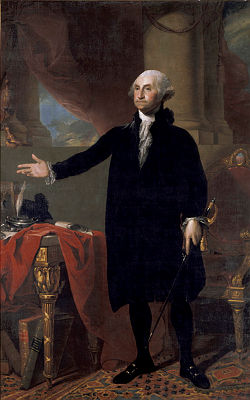
George Washington
Brief bio: Commander of the Continental Army and first president, Washington established executive precedents, cabinet government, neutrality policy, and the peaceful two-term tradition.
First Lady / White House hostess: Martha Washington — Martha Washington managed Mount Vernon and helped define the social role of the president's household in the new republic.

John Adams
Brief bio: A leading advocate for independence and the second president, Adams preserved peace with France while facing fierce party conflict at home.
First Lady / White House hostess: Abigail Adams — Abigail Adams was a brilliant letter writer, political adviser, and advocate for education and women's moral and civic influence.

Thomas Jefferson
Brief bio: Author of the Declaration of Independence and third president, Jefferson completed the Louisiana Purchase and promoted an agrarian vision of republican government.
First Lady / White House hostess: Martha Jefferson Randolph — Jefferson's wife Martha died before his presidency; his daughter Martha Jefferson Randolph served as the most important White House hostess.

James Madison
Brief bio: Known as the Father of the Constitution, Madison led the nation during the War of 1812 and helped shape the Bill of Rights.
First Lady / White House hostess: Dolley Madison — Dolley Madison became famous for White House hospitality and for helping preserve national symbols during the British burning of Washington in 1814.

James Monroe
Brief bio: Monroe presided over the Era of Good Feelings, acquired Florida, and announced the Monroe Doctrine against new European colonization in the Americas.
First Lady / White House hostess: Elizabeth Monroe — Elizabeth Monroe brought European diplomatic style to White House society and helped shape formal entertaining in the executive mansion.

John Quincy Adams
Brief bio: A diplomat, secretary of state, and president, Adams promoted national infrastructure, science, education, and later became an antislavery voice in Congress.
First Lady / White House hostess: Louisa Catherine Adams — Louisa Catherine Adams, born in London, was the first foreign-born First Lady and a cultured hostess during a difficult political era.

Andrew Jackson
Brief bio: Jackson expanded presidential power and mass politics, opposed the national bank, and presided over Indian removal, one of the gravest injustices in U.S. history.
First Lady / White House hostess: Rachel Jackson; Emily Donelson; Sarah Yorke Jackson — Rachel Jackson died before the inauguration; Emily Donelson and later Sarah Yorke Jackson served as White House hostesses.

Martin Van Buren
Brief bio: A founder of the Democratic Party and skilled political organizer, Van Buren struggled with the Panic of 1837 and economic depression.
First Lady / White House hostess: Hannah Van Buren; Angelica Van Buren — Hannah Van Buren died before his presidency; daughter-in-law Angelica Van Buren became the leading White House hostess.

William Henry Harrison
Brief bio: A military hero and Whig president, Harrison served only about one month, the shortest presidency in American history.
First Lady / White House hostess: Anna Harrison — Anna Harrison did not reach Washington before his death; her brief role symbolized the uncertainty of presidential succession before later reforms.

John Tyler
Brief bio: Tyler became president after Harrison's death and firmly established that a vice president becomes full president, not merely acting president.
First Lady / White House hostess: Letitia Tyler; Julia Gardiner Tyler — Letitia Tyler died during his term; Julia Gardiner Tyler became a young and influential First Lady after marrying Tyler in 1844.

James K. Polk
Brief bio: Polk expanded the nation through the Oregon settlement, Texas annexation aftermath, and the Mexican-American War, adding vast western territory.
First Lady / White House hostess: Sarah Childress Polk — Sarah Polk was politically informed, assisted with correspondence, and hosted with discipline and dignity in a highly consequential administration.

Zachary Taylor
Brief bio: A Mexican-American War general, Taylor opposed sectional extremists but died early in office as the slavery crisis intensified.
First Lady / White House hostess: Margaret “Peggy” Taylor — Margaret Taylor preferred private life; daughter Betty Bliss often helped fulfill public hostess duties.

Millard Fillmore
Brief bio: Fillmore signed the Compromise of 1850, including the controversial Fugitive Slave Act, while trying to hold the Union together.
First Lady / White House hostess: Abigail Fillmore — Abigail Fillmore was a teacher and intellectual partner who helped establish a permanent library in the White House.

Franklin Pierce
Brief bio: Pierce supported the Kansas-Nebraska Act, which worsened sectional conflict and accelerated the road to civil war.
First Lady / White House hostess: Jane Pierce — Jane Pierce endured deep personal tragedy, including the death of her son shortly before the inauguration, and often lived away from public life.

James Buchanan
Brief bio: Buchanan failed to stop the secession crisis, leaving office as the Union fractured on the eve of the Civil War.
First Lady / White House hostess: Harriet Lane — Buchanan never married; his niece Harriet Lane served as a celebrated White House hostess and became known as “the Democratic Queen.”
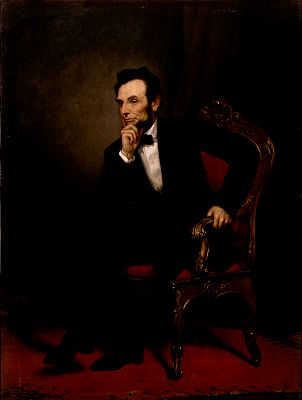
Abraham Lincoln
Brief bio: Lincoln preserved the Union, issued the Emancipation Proclamation, guided the nation through Civil War, and was assassinated after victory.
First Lady / White House hostess: Mary Todd Lincoln — Mary Todd Lincoln supported Union causes, endured intense criticism, and suffered devastating family and national grief.

Andrew Johnson
Brief bio: Johnson clashed with Congress over Reconstruction and became the first president impeached by the House, surviving Senate removal by one vote.
First Lady / White House hostess: Eliza Johnson; Martha Johnson Patterson — Eliza Johnson lived mostly privately because of poor health; daughter Martha Johnson Patterson managed many White House responsibilities.

Ulysses S. Grant
Brief bio: The Union general who accepted Lee's surrender, Grant supported Reconstruction enforcement and civil rights while his administration faced scandals.
First Lady / White House hostess: Julia Grant — Julia Grant enjoyed public life, hosted warmly, and became one of the more socially visible First Ladies of the nineteenth century.

Rutherford B. Hayes
Brief bio: Hayes took office after the disputed 1876 election and oversaw the end of federal Reconstruction in the South.
First Lady / White House hostess: Lucy Webb Hayes — Lucy Webb Hayes was college-educated, supported temperance and education, and became associated with alcohol-free White House events.

James A. Garfield
Brief bio: Garfield, a Civil War veteran and scholar-politician, was assassinated months into his presidency, intensifying calls for civil service reform.
First Lady / White House hostess: Lucretia Garfield — Lucretia Garfield was educated and resilient, supporting the president during his long medical crisis after the assassination attempt.

Chester A. Arthur
Brief bio: Arthur surprised critics by supporting the Pendleton Civil Service Reform Act after Garfield's assassination.
First Lady / White House hostess: Ellen Arthur; Mary Arthur McElroy — Ellen Arthur died before his presidency; his sister Mary Arthur McElroy served as White House hostess.

Grover Cleveland
Brief bio: Cleveland emphasized limited government, fiscal restraint, and opposition to political corruption during his first term.
First Lady / White House hostess: Rose Cleveland; Frances Folsom Cleveland — Rose Cleveland initially served as hostess; Frances Folsom Cleveland became First Lady after marrying the president at the White House in 1886.

Benjamin Harrison
Brief bio: Harrison supported protective tariffs, civil rights proposals, naval modernization, and the admission of six western states.
First Lady / White House hostess: Caroline Harrison; Mary Harrison McKee — Caroline Harrison promoted the arts and preservation; after her death, daughter Mary Harrison McKee helped serve as hostess.
Grover Cleveland
Brief bio: Cleveland returned for a nonconsecutive second term and faced the Panic of 1893, labor unrest, and debates over money and federal power.
First Lady / White House hostess: Frances Folsom Cleveland — Frances Cleveland returned as First Lady and remained one of the most popular White House figures of the late nineteenth century.

William McKinley
Brief bio: McKinley led during the Spanish-American War and the beginning of America's overseas empire before being assassinated in 1901.
First Lady / White House hostess: Ida Saxton McKinley — Ida McKinley faced serious health challenges, and the president was famously devoted to her care during public and private life.

Theodore Roosevelt
Brief bio: Roosevelt expanded conservation, trust-busting, consumer protection, naval power, and the energetic modern presidency.
First Lady / White House hostess: Edith Kermit Roosevelt — Edith Roosevelt organized a large presidential household, professionalized parts of White House social life, and protected family privacy.

William Howard Taft
Brief bio: Taft pursued antitrust enforcement and later became the only person to serve as both president and chief justice of the United States.
First Lady / White House hostess: Helen “Nellie” Taft — Helen Taft was politically ambitious, supported music and public culture, and helped bring Japanese cherry trees to Washington, D.C.

Woodrow Wilson
Brief bio: Wilson led Progressive reforms, guided the nation through World War I, and promoted the League of Nations, which the Senate rejected.
First Lady / White House hostess: Ellen Wilson; Edith Wilson — Ellen Wilson was an artist and reform advocate who died in office; Edith Wilson controlled access to the president after his 1919 stroke.

Warren G. Harding
Brief bio: Harding promised a “return to normalcy” after World War I but his administration became associated with corruption scandals after his death.
First Lady / White House hostess: Florence Harding — Florence Harding was a politically active, media-aware First Lady who influenced appointments and public image.

Calvin Coolidge
Brief bio: Coolidge symbolized small-government conservatism and presided over much of the prosperity and inequality of the 1920s.
First Lady / White House hostess: Grace Coolidge — Grace Coolidge was popular, warm, and visible; she also supported education for deaf children and softened the president's reserved image.

Herbert Hoover
Brief bio: Hoover was a humanitarian and engineer whose presidency was overwhelmed by the Great Depression after the 1929 crash.
First Lady / White House hostess: Lou Henry Hoover — Lou Henry Hoover was a linguist, geologist, Girl Scouts leader, and one of the first First Ladies to speak regularly on radio.

Franklin D. Roosevelt
Brief bio: FDR led the New Deal, expanded federal responsibility during the Great Depression, and guided the nation through most of World War II.
First Lady / White House hostess: Eleanor Roosevelt — Eleanor Roosevelt transformed the First Lady role through press conferences, travel, civil rights advocacy, and later human rights work at the United Nations.

Harry S. Truman
Brief bio: Truman made decisions that shaped the atomic age, the United Nations, NATO, the Marshall Plan, military desegregation, and the Korean War.
First Lady / White House hostess: Bess Truman — Bess Truman preferred privacy but remained a trusted partner and grounding influence during a presidency of enormous global responsibility.

Dwight D. Eisenhower
Brief bio: The former Allied commander led during the Cold War, expanded highways, warned against the military-industrial complex, and enforced school desegregation in Little Rock.
First Lady / White House hostess: Mamie Eisenhower — Mamie Eisenhower became a symbol of postwar domestic style and hospitality while managing the public life of a beloved military family.
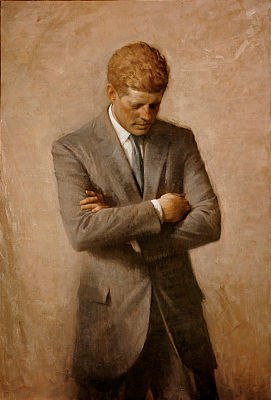
John F. Kennedy
Brief bio: Kennedy inspired a new generation, managed the Cuban Missile Crisis, advanced civil rights proposals, and was assassinated in Dallas in 1963.
First Lady / White House hostess: Jacqueline Kennedy — Jacqueline Kennedy restored the White House, elevated arts and history, and became an enduring symbol of grace during national tragedy.

Lyndon B. Johnson
Brief bio: Johnson pushed through the Civil Rights Act, Voting Rights Act, Medicare, Medicaid, and Great Society programs while escalating the Vietnam War.
First Lady / White House hostess: Lady Bird Johnson — Lady Bird Johnson promoted beautification, environmental stewardship, and public support for civil rights and anti-poverty programs.

Richard Nixon
Brief bio: Nixon opened relations with China, pursued détente, ended U.S. ground combat in Vietnam, and resigned during the Watergate scandal.
First Lady / White House hostess: Pat Nixon — Pat Nixon traveled widely, promoted volunteerism, and worked to make the White House collections and grounds more accessible to the public.

Gerald Ford
Brief bio: Ford restored stability after Watergate, pardoned Nixon, and faced inflation, recession, and the final stage of the Vietnam era.
First Lady / White House hostess: Betty Ford — Betty Ford became admired for her honesty about breast cancer, addiction recovery, women's rights, and public health.

Jimmy Carter
Brief bio: Carter emphasized human rights, negotiated the Camp David Accords, faced energy crises and inflation, and struggled with the Iran hostage crisis.
First Lady / White House hostess: Rosalynn Carter — Rosalynn Carter was a close policy partner and a national advocate for mental health, caregiving, and humanitarian work.
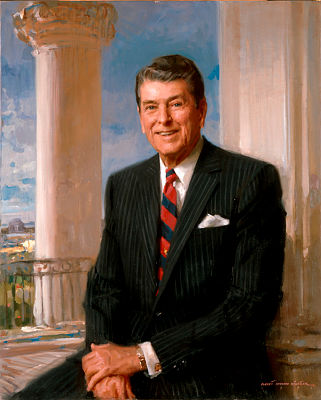
Ronald Reagan
Brief bio: Reagan reshaped conservative politics, cut taxes, increased defense spending, confronted the Soviet Union, and presided over late-Cold War change.
First Lady / White House hostess: Nancy Reagan — Nancy Reagan was a protective adviser and public campaigner, especially remembered for the “Just Say No” anti-drug initiative.

George H. W. Bush
Brief bio: Bush managed the end of the Cold War, the Gulf War, German reunification diplomacy, and a changing global order after the Soviet collapse.
First Lady / White House hostess: Barbara Bush — Barbara Bush championed family literacy, projected warmth and humor, and became matriarch of a prominent political family.

Bill Clinton
Brief bio: Clinton presided over economic growth, welfare reform, NAFTA implementation, budget surpluses, Balkan interventions, and impeachment by the House.
First Lady / White House hostess: Hillary Rodham Clinton — Hillary Rodham Clinton took an unusually policy-centered role, led health care reform efforts, and later served as senator and secretary of state.

George W. Bush
Brief bio: Bush led after September 11, created the Department of Homeland Security, launched wars in Afghanistan and Iraq, and faced Hurricane Katrina and the 2008 financial crisis.
First Lady / White House hostess: Laura Bush — Laura Bush, a teacher and librarian, promoted literacy, education, women's health, and global human rights causes.

Barack Obama
Brief bio: Obama, the first Black president, led recovery from the Great Recession, signed the Affordable Care Act, and ordered the operation that killed Osama bin Laden.
First Lady / White House hostess: Michelle Obama — Michelle Obama promoted healthy children, military families, education, and civic participation while becoming a major cultural voice.

Donald J. Trump
Brief bio: Trump pursued tax cuts, deregulation, conservative judicial appointments, immigration restrictions, and “America First” foreign policy; his first term ended after a contested 2020 election and the January 6 attack.
First Lady / White House hostess: Melania Trump — Melania Trump focused on children's well-being through the Be Best initiative and was the first naturalized U.S. citizen to serve as First Lady.
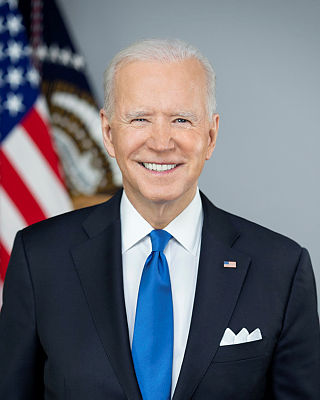
Joseph R. Biden Jr.
Brief bio: Biden led during the COVID-19 recovery period, signed major infrastructure and climate-related legislation, supported Ukraine after Russia's invasion, and withdrew U.S. forces from Afghanistan.
First Lady / White House hostess: Dr. Jill Biden — Dr. Jill Biden continued teaching while serving as First Lady and emphasized education, military families, cancer awareness, and community colleges.
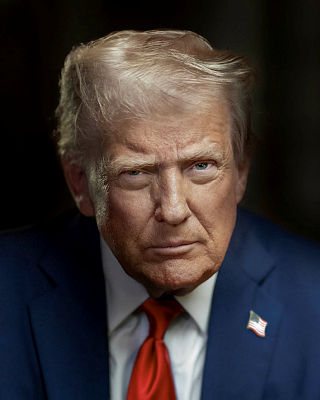
Donald J. Trump
Brief bio: Trump returned as the second president to serve nonconsecutive terms, beginning his 47th presidency in the America 250 era.
First Lady / White House hostess: Melania Trump — Melania Trump resumed the First Lady role in 2025; her second official portrait was photographed in the White House residence.
Wars and Military Conflicts in America's Story
America's wars shaped its borders, identity, economy, politics, and global role. Wars bring courage and sacrifice. They also bring grief, debt, trauma, and moral responsibility.
Friends, Allies, Enemies, and Adversaries
No nation lives alone. During the Revolution, France was America's essential ally. Britain was the enemy, but later became one of America's closest partners. During World War II, the United States allied with Britain, the Soviet Union, China, France, and many others against Nazi Germany, fascist Italy, and imperial Japan.
After World War II, Japan and Germany became close U.S. allies. The Soviet Union became the main adversary. NATO became the central alliance of the Cold War. After 1991, Russia was no longer the Soviet Union, but tensions later returned. China became both an economic partner and strategic competitor.
America's allies have included Canada, the United Kingdom, France, Germany, Japan, South Korea, Australia, Israel, and many NATO and Indo-Pacific partners. America's adversaries have included Nazi Germany, imperial Japan, the Soviet Union, al-Qaeda, ISIS, and hostile governments that challenged U.S. interests.
The Constitution and Amendments: America's Repair Manual
The Constitution is America's operating system. It establishes government, divides power, and provides methods for change. The amendments are America's repair manual. They show what each generation learned.
Year-by-Year Timeline: 1776-2026
This timeline gives a fast historical path from independence to the 250th birthday. It is designed for readers, students, teachers, and community programs.
America at 250 and the Next 250 Years
America should celebrate its endurance. Few republics last 250 years. America should celebrate its ideals: liberty, equality, consent of the governed, freedom of speech, freedom of religion, and the right to challenge power. It should celebrate its people: Native peoples, descendants of enslaved Africans, immigrants, workers, veterans, entrepreneurs, artists, scientists, teachers, parents, students, and public servants.
But celebration without truth is weak. The strongest celebration is honest. America must remember that freedom was not given to everyone at once. It must remember slavery, Native dispossession, segregation, exclusion, internment, discrimination, unjust violence, pandemics, economic pain, and political crisis. A nation without memory becomes arrogant. A nation with honest memory becomes wiser.
The next 250 years will test America in new ways: climate change, artificial intelligence, biotechnology, space exploration, immigration, global competition, political division, economic change, and diversity. The question is not whether America will face crises. It will. The question is whether Americans will face them together.
Freedom must be protected in law and lived in practice.
Self-government requires truth, participation, and peaceful transfer of power.
A nation must repair old harms while preventing new ones.
New technology must serve people, not replace human dignity.
America's many cultures are a strength when united by shared civic values.
The American experiment continues only if each generation improves it.
Happy 250th Birthday, America.
Celebrate. Learn. Remember. Participate. Vote. Serve. Build. Teach. Listen. Improve.
Created by YebboBooks and YebboHistory
A tribute to history, citizenship, and the future of the American dream.
Source Notes
This HTML book is written as an educational overview. Readers should consult official archives, museums, libraries, and scholarly histories for deeper study.
Official 250th anniversary commemoration
Declaration of Independence
U.S. Constitution
Bill of Rights
Decennial Census history
U.S. GDP and economic activity
Presidential portraits
First Lady portraits and hostesses
Comments